
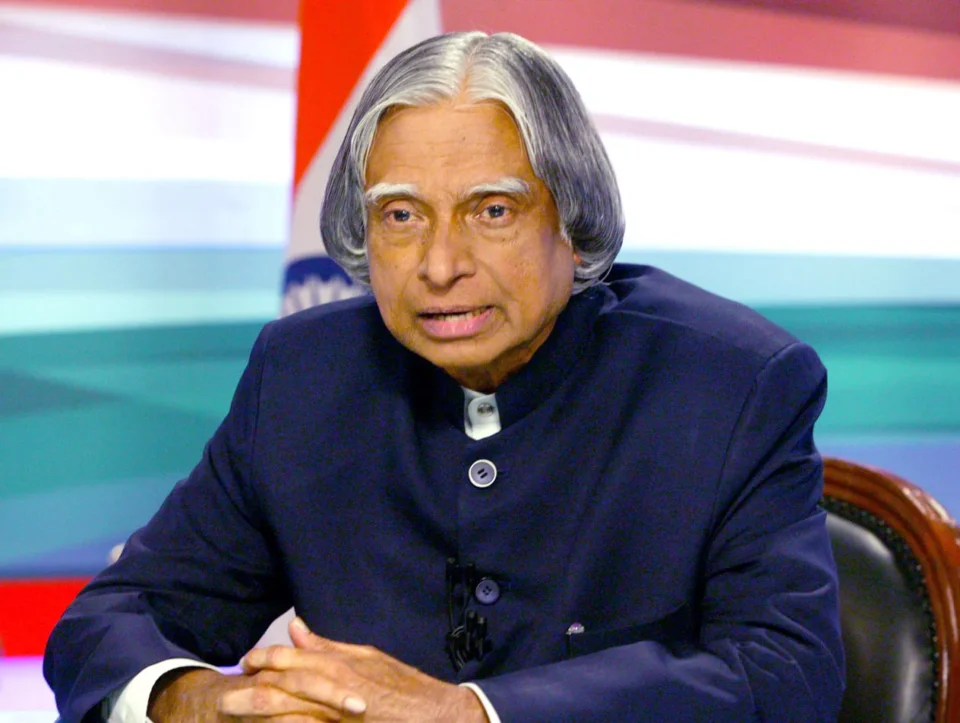
A.P.J. Abdul Kalam, known as the “Missile Man of India,” was an esteemed scientist, visionary leader, and the 11th President of India. His journey from humble beginnings to becoming a revered figure in India is truly inspiring. Let’s explore the life, achievements, and legacy of Dr. A.P.J. Abdul Kalam.
Early Life and Education
Humble Beginnings: Born on October 15, 1931, in Rameswaram, Tamil Nadu, Avul Pakir Jainulabdeen Abdul Kalam came from a modest family. His father was a boat owner and imam, while his mother was a homemaker. Despite financial challenges, Kalam was a dedicated student with a love for learning.
Academic Pursuits: Kalam’s early education took place at Schwartz Higher Secondary School in Ramanathapuram. He graduated in Physics from St. Joseph’s College, Tiruchirappalli, and then pursued aerospace engineering at the Madras Institute of Technology (MIT).
Contributions to Science and Technology
Missile Development: At the Defence Research and Development Organisation (DRDO) and the Indian Space Research Organisation (ISRO), Kalam significantly advanced India’s missile and space programs. He was crucial in developing the Agni and Prithvi missiles, earning the title “Missile Man of India.”
Pokhran-II Tests: In 1998, Kalam led the scientific team for the Pokhran-II nuclear tests. These tests established India as a nuclear power, showcasing Kalam’s strategic vision and scientific prowess.
Space Research: Kalam’s work at ISRO included developing the SLV-III, India’s first satellite launch vehicle, which successfully deployed the Rohini satellite in 1980. This achievement was a major milestone in India’s space journey.
Presidency and Beyond
The People’s President: Elected as the 11th President of India in 2002, Kalam’s presidency was marked by humility and accessibility. His connection with the people, especially the youth, earned him the affectionate title of “People’s President.”
Vision for India: Kalam’s vision for India was detailed in his book “India 2020: A Vision for the New Millennium.” He dreamed of transforming India into a developed nation by 2020, focusing on education, innovation, and sustainable development.
Inspiring the Youth: After his presidency, Kalam dedicated his life to teaching and mentoring young minds. He traveled extensively, delivering lectures at schools, colleges, and universities, inspiring millions with his vision for a better India.
Awards and Recognitions
National and International Honors: Kalam received numerous awards, including the Padma Bhushan, Padma Vibhushan, and Bharat Ratna, India’s highest civilian honor. His contributions to science and leadership earned him global recognition.
Author and Thought Leader: Kalam authored several books, such as “Wings of Fire,” “Ignited Minds,” and “My Journey.” His writings continue to inspire readers worldwide, reflecting his commitment to education, innovation, and national development.
Legacy and Impact
Role Model: Kalam’s life, marked by perseverance, humility, and relentless pursuit of knowledge, serves as a role model for aspiring scientists, leaders, and citizens. His belief in dreams and hard work continues to motivate many.
Educational Initiatives: Various educational programs and institutions named after Kalam foster scientific temper and innovation among the youth. His birthday, October 15, is celebrated as World Students’ Day in his honor.
Enduring Influence: Kalam’s vision for a developed and self-reliant India resonates with policymakers and citizens alike. His focus on education, technology, and rural development remains relevant in addressing contemporary challenges.
A.P.J. Abdul Kalam’s life is a testament to the power of dreams, dedication, and service to the nation. His contributions to science, leadership, and unwavering commitment to India’s development have left an indelible mark on the country’s history. Celebrating Kalam is celebrating the spirit of innovation, perseverance, and selfless service.

9,069 comments